.png?w=460&h=118)
Quick Answer
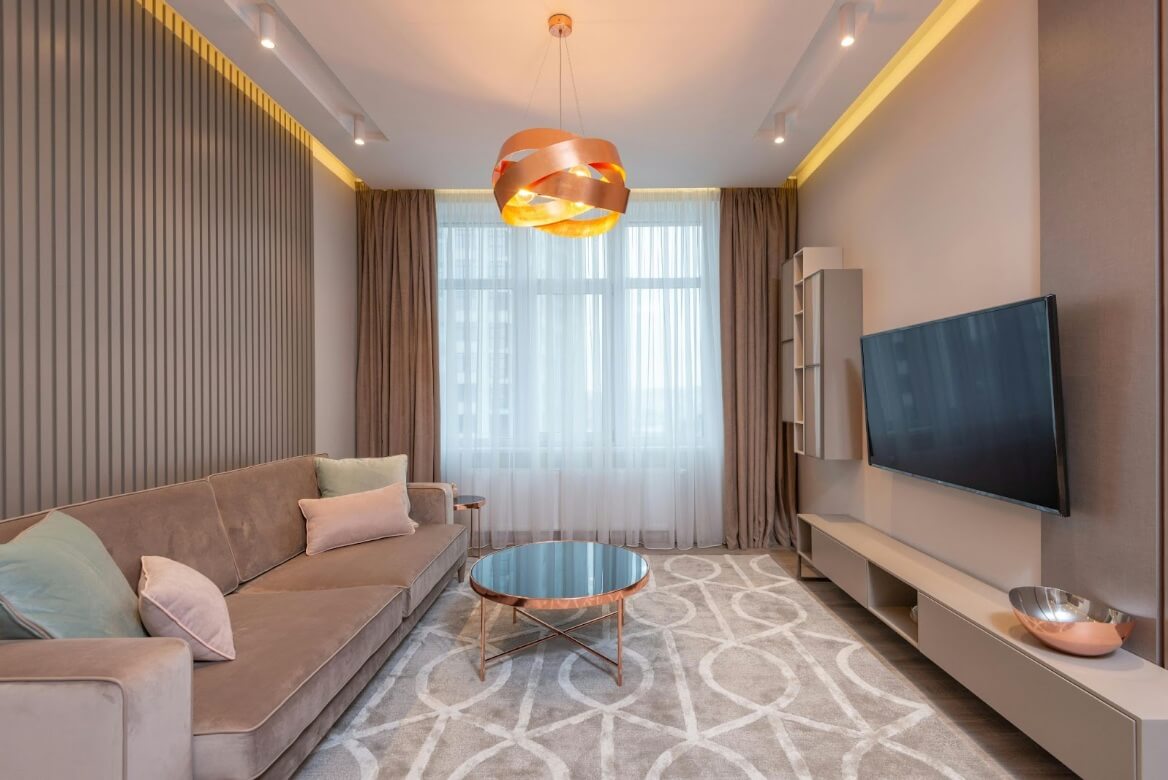
When choosing ceiling lights, consider the room's size, ceiling height, and purpose. Select from chandeliers, pendants, flush mounts, or track lighting based on your space and needs. Factor in light temperature (warm to cool), energy efficiency, and how the fixture complements your décor style.
Ceiling lights do far more than simply illuminate your home. They set the mood, save energy and transform your home's ambience at the flick of a switch. For UK homeowners, selecting the right ceiling light involves navigating numerous options, from traditional chandeliers to modern LED panels. This guide will walk you through everything you need to know before making your purchase.
Key Takeaways
- Match your ceiling light type to your room's dimensions; chandeliers for high ceilings, flush mounts for lower ones, and pendants for focused illumination over specific areas.
- Consider bulb specifications carefully; LED options offer the best energy efficiency while light temperature (measured in Kelvins) significantly impacts room ambience.
- Proper positioning is crucial; maintain safe clearance heights, space multiple fixtures evenly, and follow zone-specific safety ratings for bathroom installations.
Types of Ceiling Lights
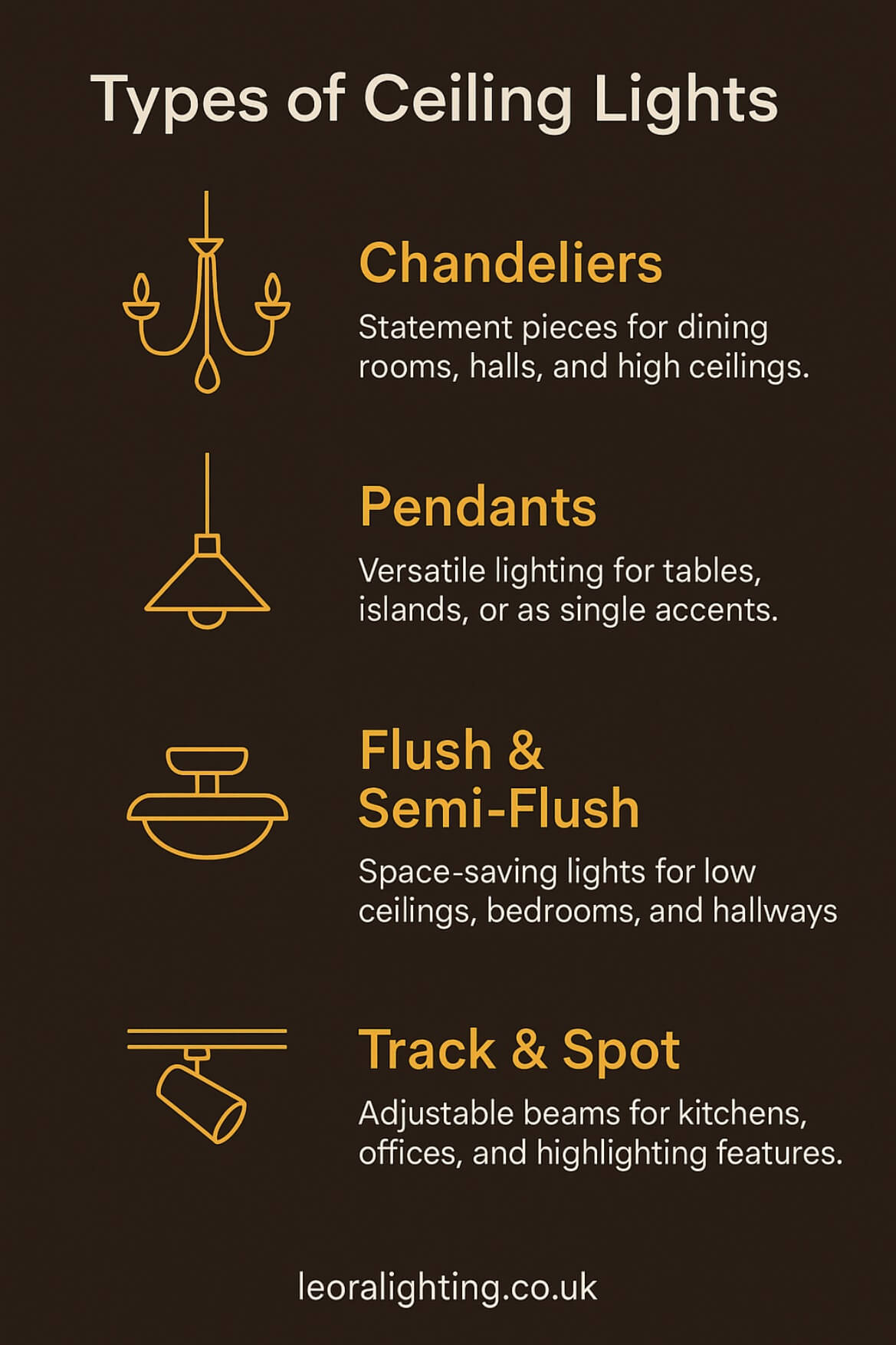
The right ceiling light transforms a room from ordinary to extraordinary. Each type serves different purposes and creates distinct atmospheres.
Chandeliers
Chandeliers create an elegant focal point in any room. These statement pieces work beautifully in entrance halls, dining rooms and living spaces with sufficient ceiling height. Modern chandeliers aren't just crystal affairs; they come in contemporary designs that can complement various interior styles.
Chandeliers range from traditional crystal designs to sleek modern interpretations that suit both period homes and contemporary spaces.
Pendant Lights
Pendant lights hang down from the ceiling on a cord, chain or rod, directing light downward. They're incredibly versatile and work well over dining tables, kitchen islands and in living rooms.
- Single pendants make a stylish statement over small tables or in corners. They work particularly well in bedrooms and smaller spaces.
- For larger areas or to create visual impact, multi-pendants combine several lights on a single fitting. These work brilliantly over dining tables or in stairwells.
- Linear pendants feature multiple lights arranged in a row, ideal for illuminating kitchen islands or long dining tables.
Flush Mount Lights
When ceiling height is limited, flush mounted lights are the perfect solution. These fixtures sit directly against the ceiling, making them ideal for hallways, bedrooms and bathrooms. They provide good general illumination without taking up visual space.
Semi-flush mounts hang a short distance from the ceiling, offering a bit more visual interest while still working in spaces with lower ceilings.
Track and Spot Lights
Spot lights and track lighting systems provide directional illumination that can be adjusted to highlight artwork, architectural features or work areas. They're excellent for kitchens, home offices and spaces where targeted lighting is needed.
Track lighting allows multiple light heads to be positioned along a track, giving you flexibility to change the lighting direction as needed.
Ceiling Light Positioning Tips
Proper positioning enhances both functionality and aesthetic appeal of your ceiling lights.
Room-Specific Guidance
- Living Rooms: Centre pendant lights or chandeliers in the middle of the room, or position them over seating areas. Supplement with recessed or track lighting to highlight artwork or architectural features.
- Kitchens: Position task lighting directly over work surfaces. Pendant lights should hang 75-85 cm above kitchen islands or dining tables.
- Hallways: Space flush or semi-flush lights evenly along hallways, approximately 2-3 metres apart for consistent illumination.
- Bedrooms: Central fixtures should provide ambient lighting, while bedside pendants should hang approximately 40-45 cm above bedside tables.
- Bathrooms: UK safety regulations require specific IP (Ingress Protection) ratings for bathroom lighting. The bathroom is divided into zones:
|
Zone |
Location |
Minimum IP Rating |
Suitable Lights |
|
0 |
Inside bath/shower |
IPX7 |
Very limited specialist fixtures |
|
1 |
Above bath/shower up to 2.25m |
IPX4 |
Bathroom-rated flush lights |
|
2 |
0.6m beyond Zone 1 |
IPX4 |
Most bathroom-rated fixtures |
|
Outside zones |
Beyond Zone 2 |
IP20 |
Standard ceiling lights |
Spacing Considerations
For recessed downlights, follow this spacing rule: the distance between lights should equal approximately half the ceiling height. For a standard 2.4m ceiling, space downlights roughly 1.2m apart.
Multi-pendant lights should be spaced 30-40 cm apart to create even pools of light without overwhelming the space.
How to Choose the Right Bulbs
Bulb selection dramatically impacts both energy consumption and ambience. Understanding a few key concepts helps make informed choices.
Light temperature, measured in Kelvins (K), determines the feel of your space:
- Warm white (2700-3000K): Creates cosy, relaxing atmospheres ideal for living rooms and bedrooms
- Natural white (3500-4100K): Offers balanced light perfect for kitchens and work areas
- Cool white (5000-6500K): Delivers bright, energising light suitable for task-focused spaces
UK energy standards increasingly favour LED bulbs for their efficiency. Current regulations require residential light fittings to deliver at least 75 lumens per watt, a standard easily met by quality LEDs.
Smart bulbs offer convenience through app control, scheduled lighting, and colour temperature adjustments. While more expensive initially, they provide flexibility and potential energy savings through precise control.
|
Bulb Type |
Lifespan (hours) |
Energy Efficiency |
Dimmable Options |
Best Uses |
|
LED |
15,000-50,000 |
Excellent |
Many |
All applications |
|
CFL |
8,000-10,000 |
Good |
Limited |
General lighting |
|
Halogen |
2,000-4,000 |
Poor (phased out) |
Yes |
N/A (discontinued) |
Ceiling Light Styles & Fittings
The style and fitting of your ceiling light can dramatically impact your room's overall aesthetic.
Popular Styles
- Modern: Clean lines, minimalist designs and materials like brushed metal and glass.
- Traditional: Classic shapes, often featuring ornate details and materials like brass and crystal.
- Industrial: Raw, utilitarian designs featuring exposed bulbs, metal finishes and vintage-inspired elements.
- Scandinavian: Simple, functional designs with natural materials and neutral colours.
Fitting Types
Ceiling light fittings vary in how they attach to your ceiling. Common ceiling light fittings include:
- Fixed fittings: Attached directly to the ceiling, requiring professional installation.
- Plug-in fittings: Can be plugged into a standard outlet, ideal for renters.
- Track fittings: Attached to a track, allowing for adjustable positioning.
Matching your ceiling light style with your room decor creates a cohesive look. For example, industrial pendants complement exposed brick walls, while crystal chandeliers pair beautifully with traditional furnishings.
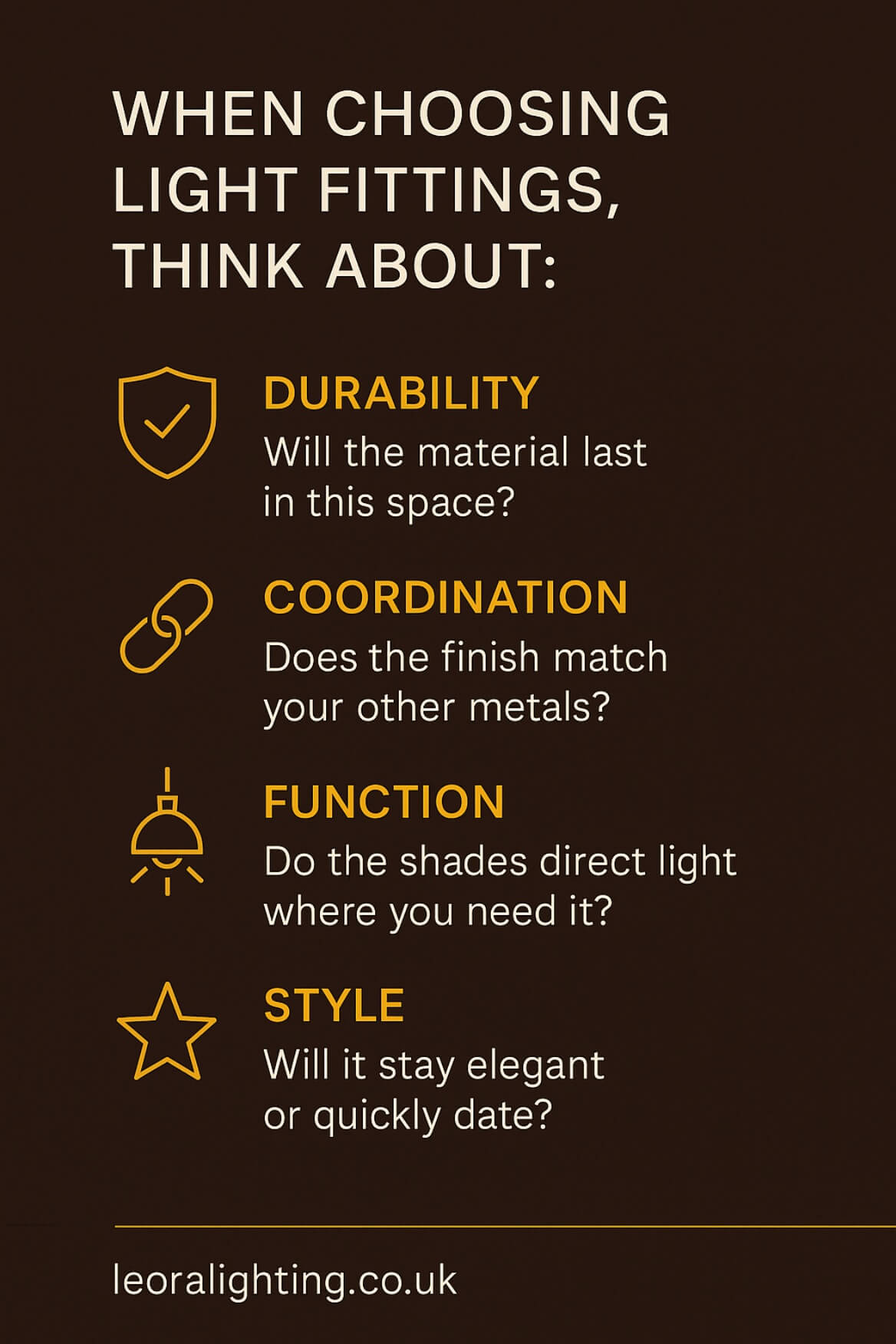
Explore our different lighting styles and fittings to find options that enhance your décor while meeting functional needs.
Quick Tips Before Buying Ceiling Lights
Consider these practical factors before making your purchase:
- Measure ceiling height and room dimensions before selecting fixtures. Allow at least 7 feet clearance below hanging lights in walkways.
- Consider maintenance requirements. Intricate designs may collect dust and require regular cleaning. Fixtures in kitchens should resist grease buildup.
- Verify compatibility with existing systems, especially for dimmable fixtures. Not all LED bulbs work with older dimmer switches.
- Check energy efficiency ratings. Look for fixtures that support bulbs delivering at least 75 lumens per watt to meet UK building regulations.
- Ensure any recessed lights maintain fire ratings if installed through ceilings that serve as fire barriers.
FAQs
How do I know what size ceiling light to choose?
Measure your room dimensions and ceiling height. As a rule of thumb, add the room length and width in feet, then convert to inches for the ideal diameter. For example, a 12×14 foot room would suit a 26-inch diameter fixture.
Can I install a chandelier in a low-ceiling room?
Yes, but choose a semi-flush chandelier design that sits closer to the ceiling. Ensure at least 7 feet of clearance below the fixture for safety and visual comfort.
What bulbs work best with ceiling lights?
LED bulbs offer the best combination of energy efficiency, longevity, and light quality. Look for CRI (Colour Rendering Index) ratings above 80 for accurate colour representation.
How do I clean and maintain ceiling lights?
Turn off and allow fixtures to cool before cleaning. Dust regularly with a microfiber cloth. For deeper cleaning, remove glass components and wash with mild soap. Always follow manufacturer guidelines.
Are dimmable ceiling lights worth it?
Absolutely. Dimmers increase bulb lifespan, save energy, and allow you to adjust lighting levels for different activities and moods. Ensure your bulbs and switches are compatible with dimming technology.
Conclusion
Choosing the right ceiling lights transforms how your home feels and functions. Quality lighting creates ambience, enhances activities, and showcases your personal style.
Ready to find the perfect ceiling lights for your home? Browse our complete ceiling lights collection to discover options that combine practicality with stunning design.
Sources